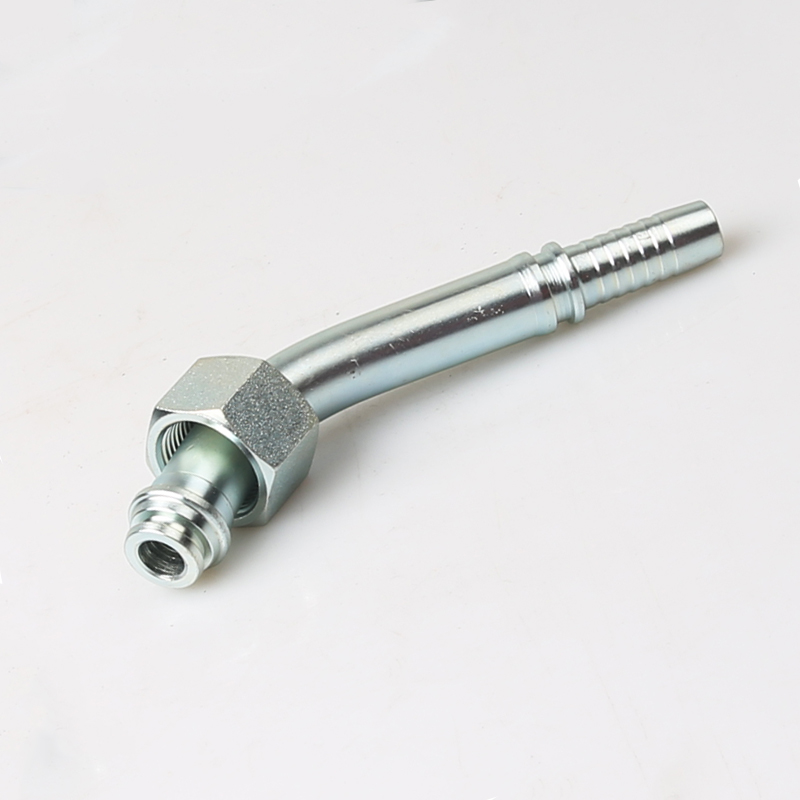
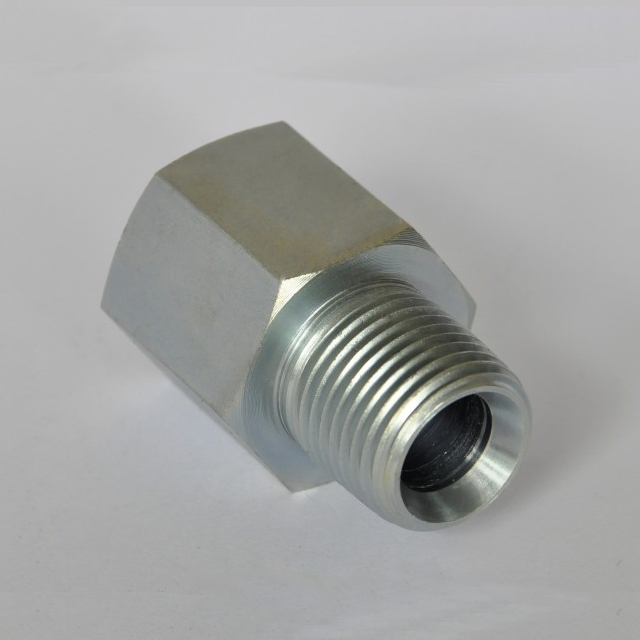
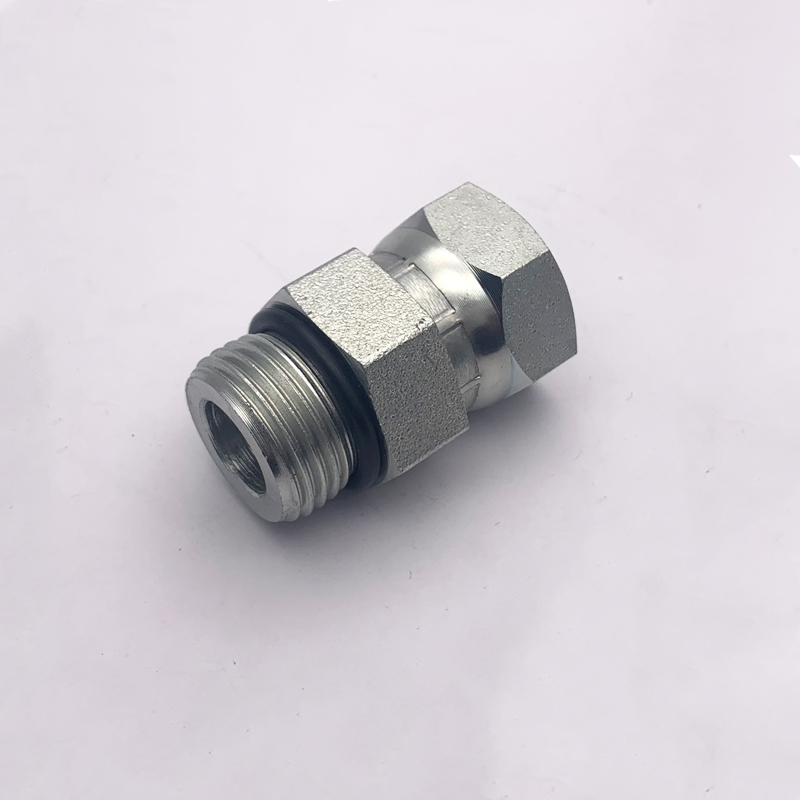
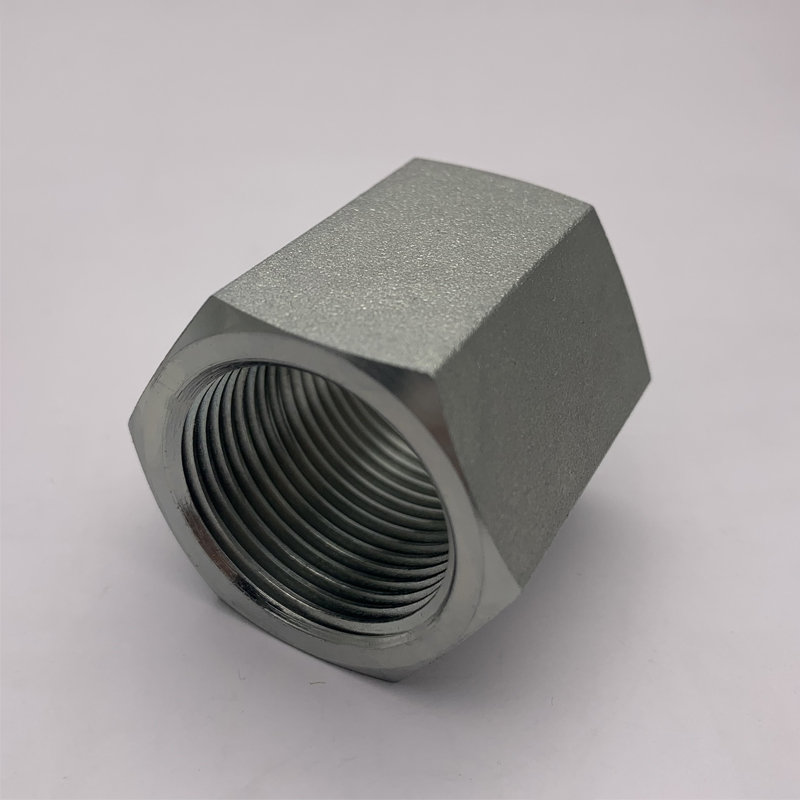
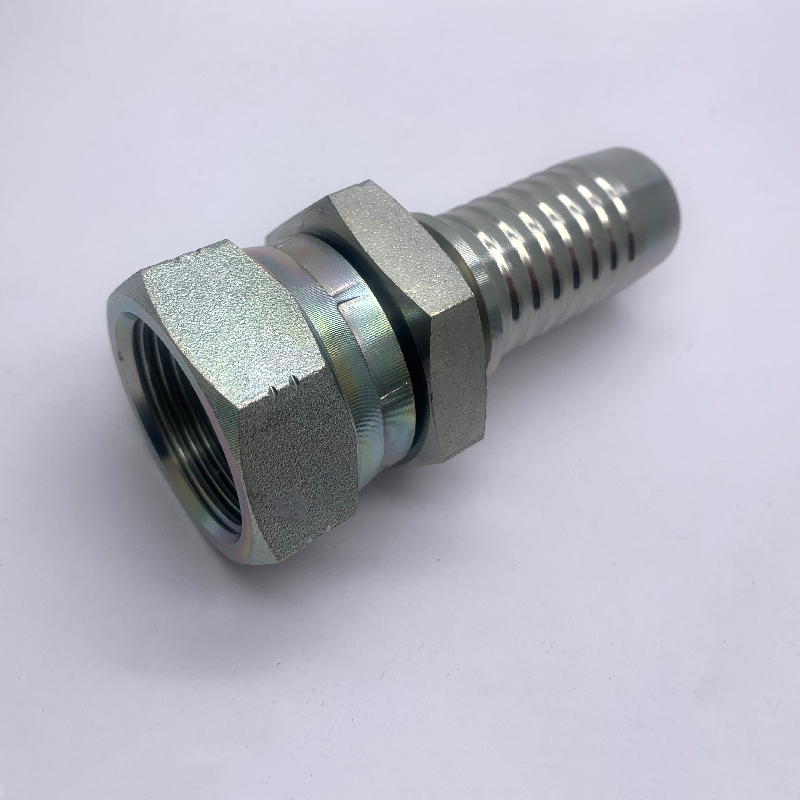
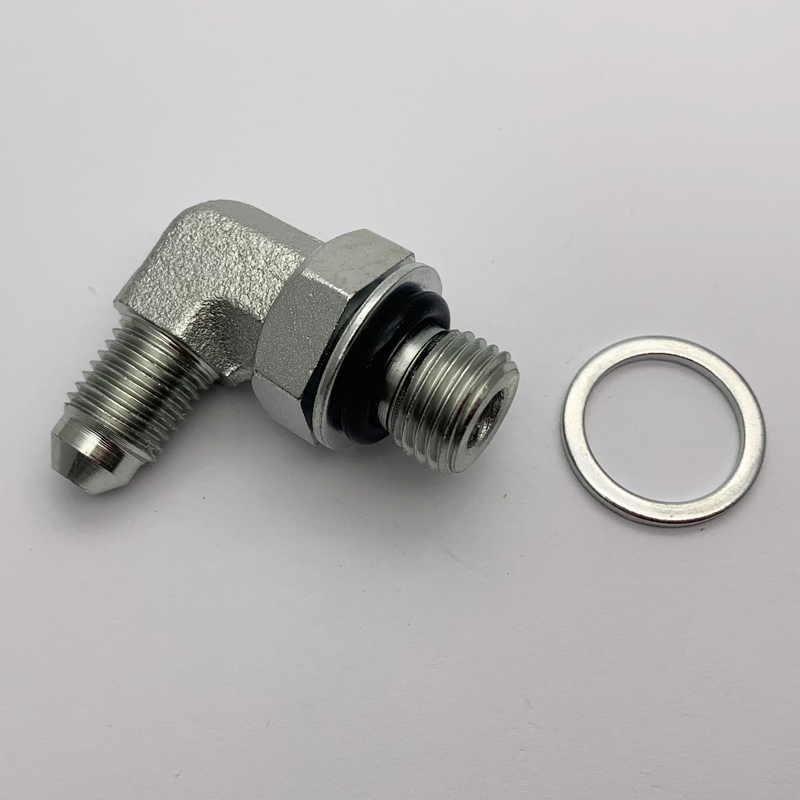
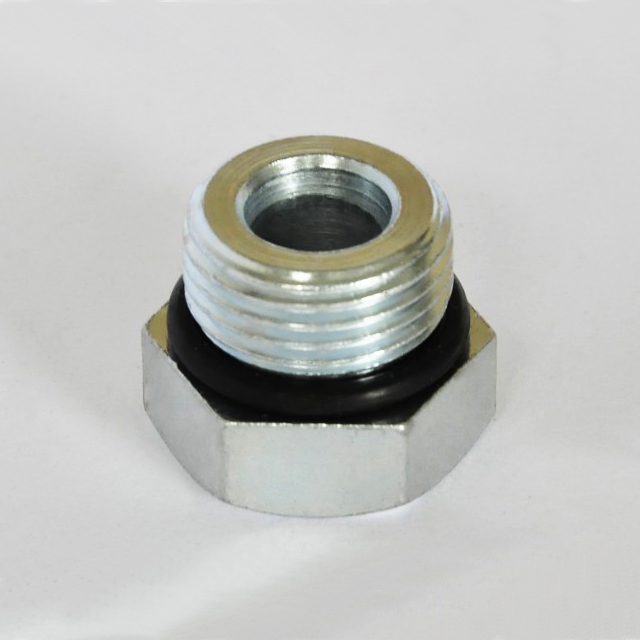
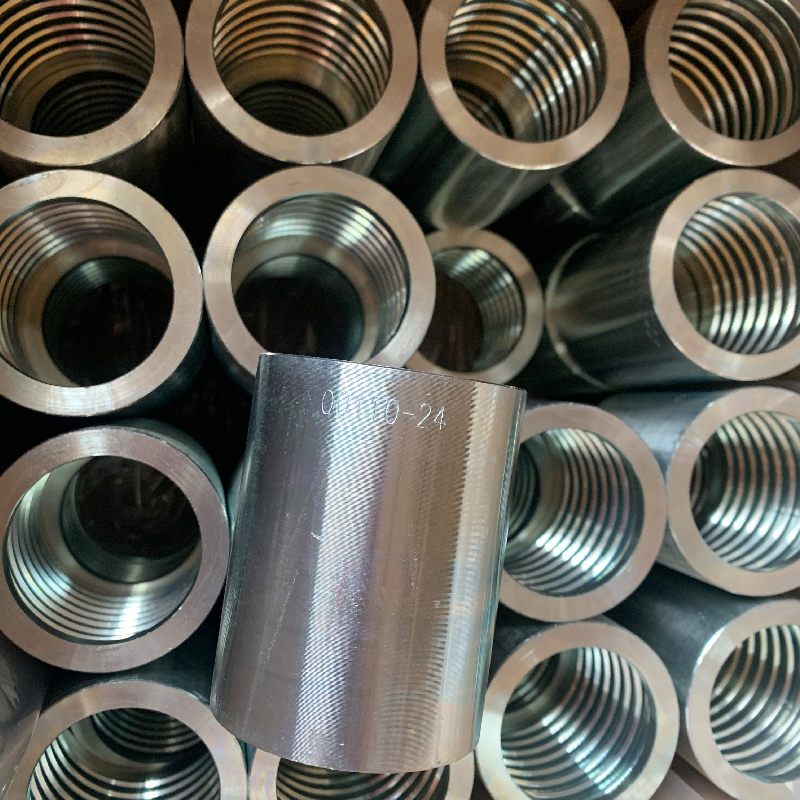
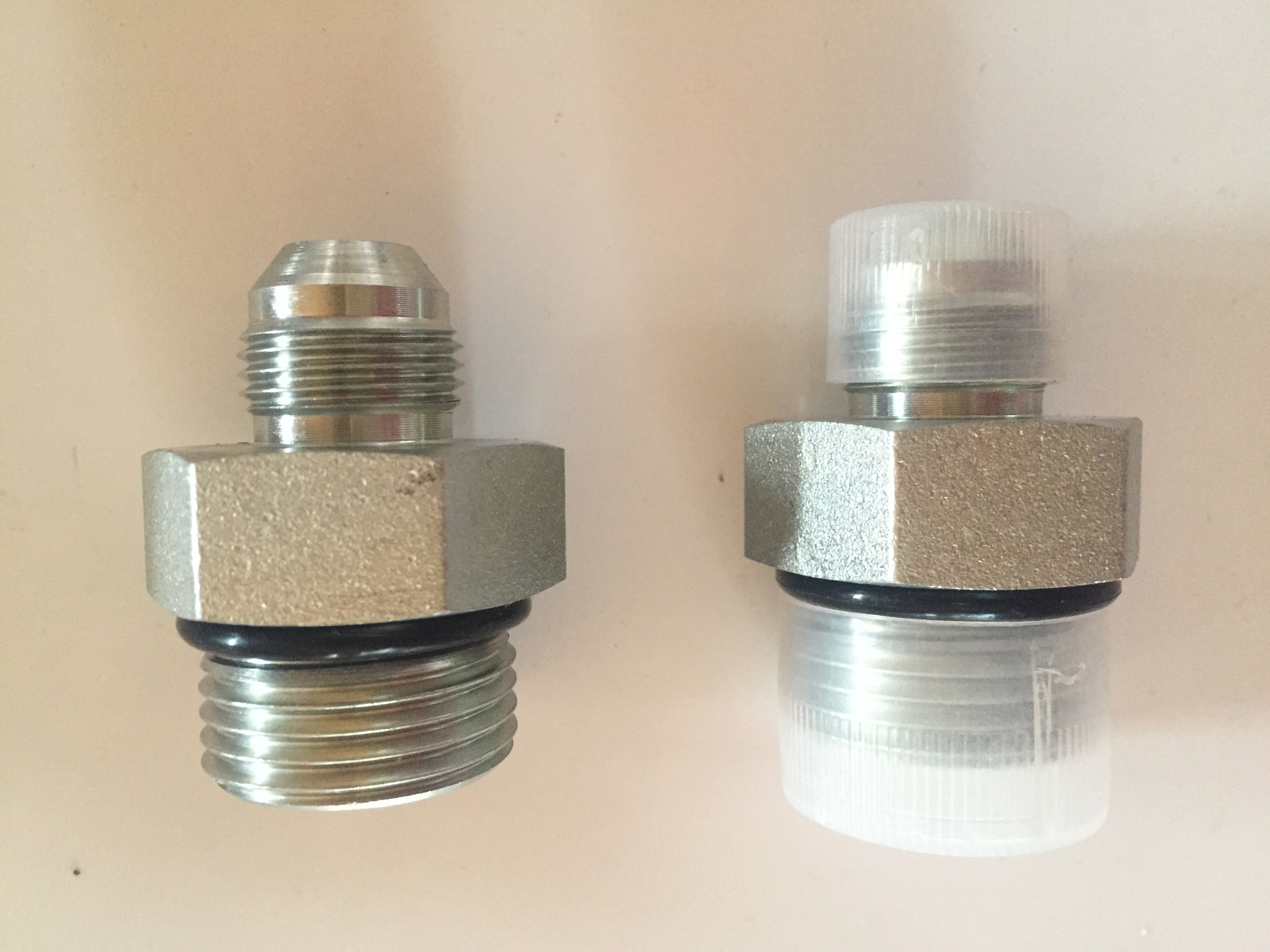
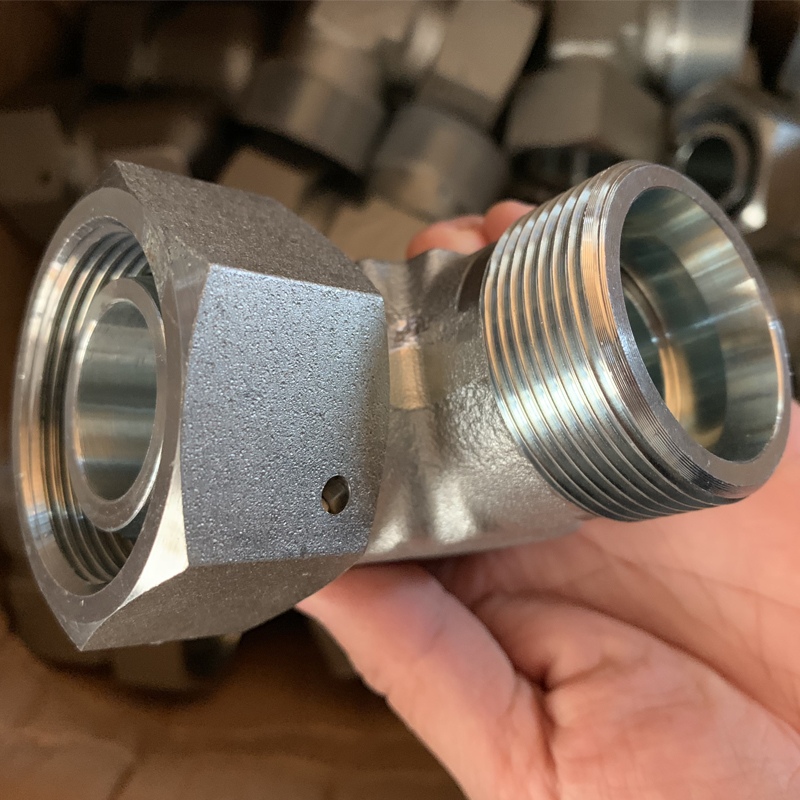
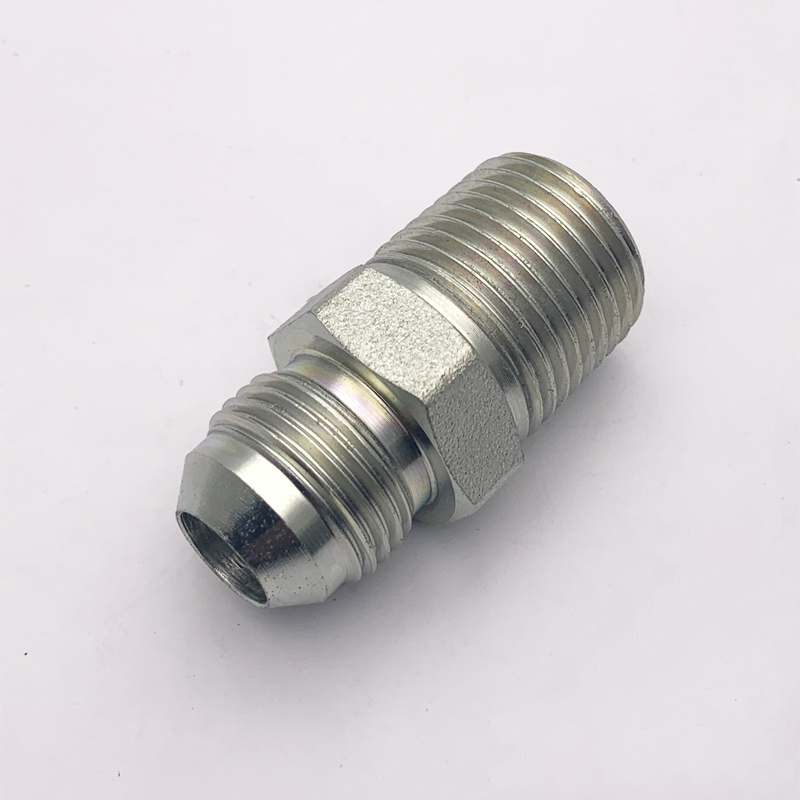
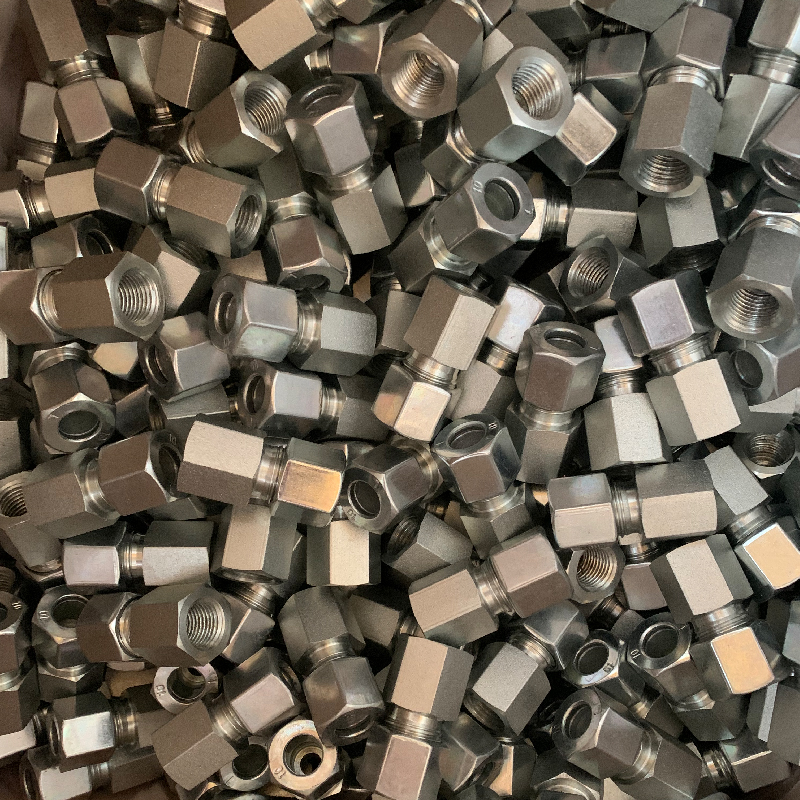
Hydraulic fittings should be identified by both the thread and the sealing surface. Measuring only the outside diameter can lead to a false match because several thread systems have similar nominal sizes. Use the comparison below to narrow the fitting family, then confirm the exact size against the product drawing and mating-port specification.
Hydraulic Fitting Quick Identification Chart
Connection familyTypical identification featurePrimary sealing methodWhat to inspect
JICStraight thread with a 37-degree flare seatMetal-to-metal flareThread, seat angle and tube size
ORFSStraight thread with a flat face and visible O-ringO-ring face sealO-ring groove, face and thread
SAE O-ring boss (ORB)Straight thread with an O-ring near the hex or shoulderO-ring against port chamferO-ring location and port specification
NPT/NPTFTapered pipe threadThread interference; sealing practice depends on specificationTaper, pitch and thread form
NPSMStraight pipe thread, commonly used with a swivel seatMechanical seat rather than the straight thread aloneSeat geometry and mating fitting
BSPP/GParallel BSP threadBonded seal, O-ring or metal seat depending on designParallel thread and sealing face
BSPT/RTapered BSP threadThread interferenceTaper, pitch and thread form
Metric 24-degree coneMetric thread with a 24-degree sealing coneCone, cutting ring or O-ring arrangement depending on designMetric pitch, cone and light/heavy series
SAE flangeFlange head retained by split or one-piece clampO-ring at flange faceFlange code, head size and bolt pattern
How to Identify an Unknown Hydraulic Fitting
Clean the fitting so the thread and sealing surface are visible.
Determine whether the thread is straight or tapered.
Measure the male thread outside diameter or female thread inside diameter with calipers.
Measure the thread pitch with a pitch gauge. Confirm whether the gauge is metric or threads per inch.
Inspect the sealing surface: flare, cone, flat face, O-ring, bonded seal or tapered thread.
Note whether the fitting is male, female, swivel, bulkhead, elbow or flange.
Compare the measurements with the applicable product drawing or standard.
Do not force together connections that appear close. Partial thread engagement does not prove compatibility, and an incorrect sealing angle can leak even when the threads assemble.
Common Hydraulic Fitting Identification Mistakes
Confusing BSPP with metric threads
Some parallel BSP and metric sizes can appear similar. Check both pitch and sealing geometry. BSPP does not identify a single sealing method by itself.
Treating NPT and BSPT as interchangeable
Both are tapered pipe threads, but their thread forms and pitches differ. They should be identified separately.
Identifying a fitting by thread alone
The thread may provide mechanical retention while the seal occurs at a cone, flare, face or O-ring. Both features must match.
Ignoring light and heavy metric series
Metric 24-degree fittings may belong to different series. Confirm the tube size, thread and cone arrangement against the relevant drawing.
Frequently Asked Questions
What measurements are needed to identify a hydraulic fitting?
Measure thread diameter and pitch, then identify the sealing surface, fitting orientation and mating-port type.
Can two fittings thread together but use different seals?
Yes. Thread engagement alone does not confirm that the sealing surfaces or standards are compatible.
What is the difference between ORFS and JIC?
ORFS uses a flat face with an O-ring; JIC uses a 37-degree flare seat.
Should thread sealant be used on every hydraulic fitting?
No. Sealant use depends on the connection design. Flare, cone, face-seal and O-ring connections seal outside the thread and should be assembled according to their specifications.
Still unsure which fitting you have? Send photos of the thread and sealing face together with caliper and pitch-gauge measurements. Ruihua can compare the information with its available product drawings.
Related Hydraulic Fitting Guides